

Replacing the windows in your South Florida home is a significant investment, and choosing the right windows often requires more than just comparing prices. If you are in the market for new windows, you need to consider strength, energy efficiency, frame materials, window styles, and what your home requires specifically according to building code. Especially in a storm-prone area such as South Florida.
One of the biggest decisions most Floridians have to consider is whether they want to replace their windows with traditional windows or impact windows. For almost every floridian who lives within 30 miles of the coast (which is most Floridians) impact windows are worth the investment. Traditional windows typically cost about 25% less, but if your existing windows already need replacing, it’s worth comparing impact-resistant windows.
The costs are often the same or comparable regardless of which windows you choose. Don’t compare the cost of impact windows to doing nothing, think about how much more you’re paying to upgrade to impact protection as part of a replacement project you’re already likely to need in the next few months to years.
When should you replace the windows in your South Florida home?
If you are like most Floridians, you likely haven’t given much thought to their windows until their windows can no longer be opened, begin to leak, or are damaged or worn down to the point where they can be noticed from the driveway.
How long do windows last in our area?
There is no general rule for lifespan, it varies according to the materials and the quality of construction, the quality of installation, the proximity to seawater, the amount of direct sunlight your windows receive, how frequently it is operated, and whether or not it has ever been subjected to physical or storm damage.
Most experts will tell you windows generally should be inspected after 15-20 years of service. Although, well built and properly maintained windows can last considerably longer.
Signs your windows need replacement
ENERGY STAR and other window organizations mention drafts, deteriorated window components, and windows that no longer open as solid reasons to consider replacing your windows.
But generally, we find these symptoms to be the most telling signs that a window system should be replaced:
- Your windows are difficult to open or close.
- If your windows stick, bind, or require force, the frame may have shifted, the hardware may be worn, or the installation may have been inaccurate from the start.
- Water is getting in around your windows.
- You feel air moving around a closed window.
- You can see deterioration such as corroded frames, cracked sealant, warped parts, and/or failing glazing seals.
- Persistent condensation inside the insulated glass. (Condensation you can wipe off an exposed glass surface does not count.)
- They are not hurricane impact-rated.
Should you repair or replacing your windows?
It generally depends. Worn-out parts, broken seals, damaged glass, or windows that are difficult to open and close can often be fixed without replacing the entire window.
Window replacement starts to make sense when several windows are failing at once, when you want a different style or more ventilation, or when you want hurricane protection and your current windows can’t provide it.
You do not have to replace your windows with the same style of windows
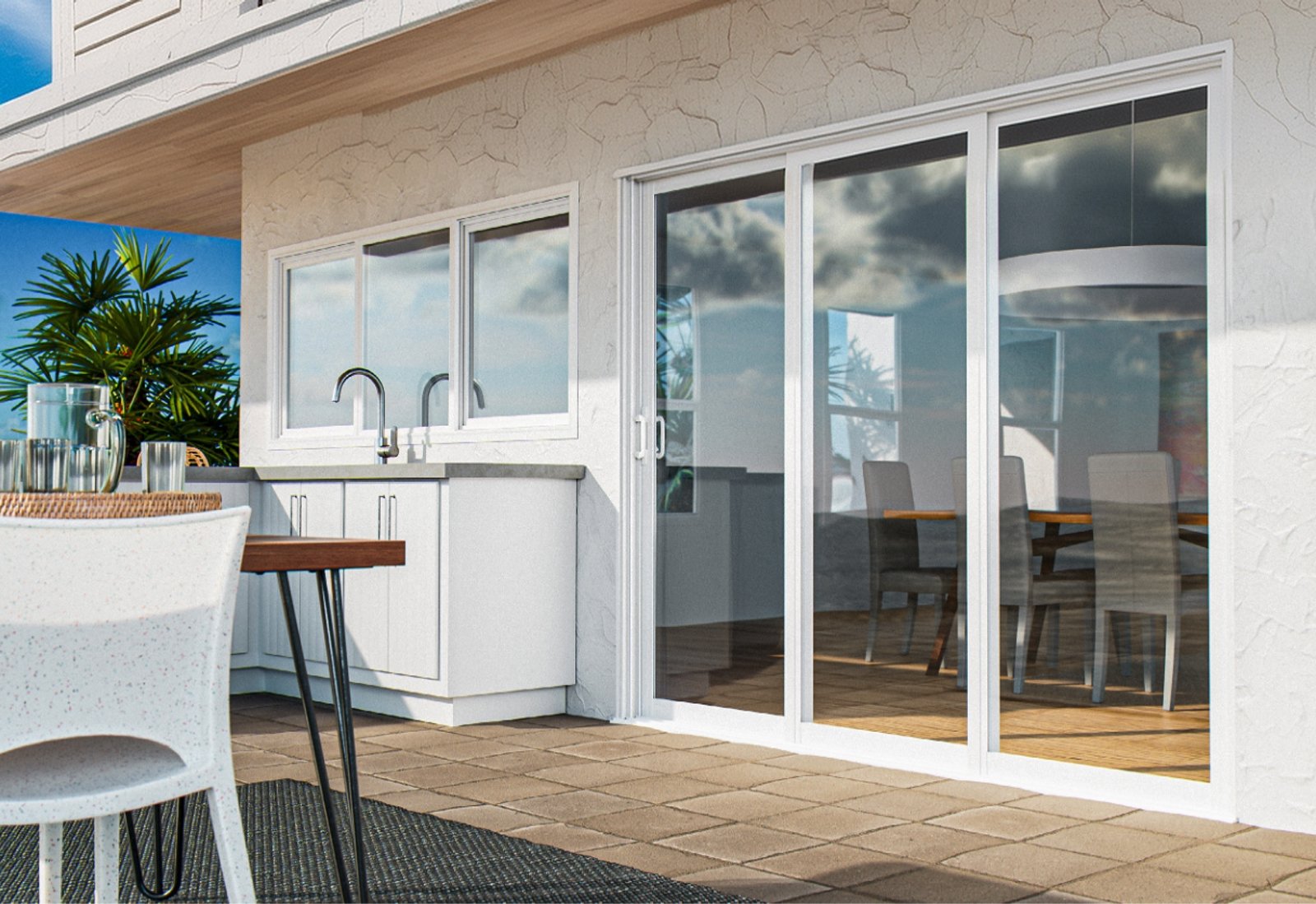
The majority of home owners think that when you replace a window you have to buy a new type of window to go in the wall. For example, a fixed pane in a bedroom can be turned into an opening window and an old horizontal roller can be changed into a single-hung one if you prefer that appearance or manner of operation.
you want to change how a window opens or operates, first verify the product’s approval, the opening dimensions, and any emergency escape and rescue requirements that apply to the room. Florida’s building code includes specific requirements for windows that function as emergency exits. Emergency exit windows must open and provide enough clear space for someone to escape (or for a firefighter to enter) during a fire or other emergency.

| Window style | How it operates | What to consider |
|---|---|---|
| Fixed or picture | Doesn’t open | When the view is more important than ventilation. |
| Single-hung | Bottom sash moves upward | Vertical operation, with a horizontal divider through the window |
| Horizontal roller | One or more sashes slide sideways | Useful to consider for wide openings, where you would prefer ventilation. |
| Double-hung | Upper and lower sashes move | More operating flexibility. |
| Casement | Hinged at the side and swings outward | Check the outside clearance and whether you can comfortably reach the handle. |
| Awning | Hinged at the top and swings outward | Consider the opening’s height and the space outside |
These are operating styles, not hurricane ratings. Select an approved product within the style you want. Check this window style guide for more information.
Can you turn a fixed window into one that opens?
Usually, yes. FIrst see why you would want to make that change. Would an operable window improve airflow in that room? Would you use it? Can you reach it to open it comfortably? Is there furniture in front of where a crank or a sash would go? Does the operable window perform the same against water for that exposure?
A wide picture window may need a different panel arrangement when converted to an openable window. If you can, have the contractor draw those divisions over a photo of your existing opening, a small catalog image is often not enough to show how a difference in window style could affect the view out of the window.
For bedroom windows especially, have your contractor check local emergency escape requirements before choosing a different window style.
- Fixed when the view matters more than airflow.
- Single-hung when you want a traditional look and vertical operation.
- Choose a horizontal roller when the opening is wide, and sliding feels natural.
Choose what works best for each room. Your living room and laundry room have different needs, so the same window style may not be the best choice for both.
Try the window before ordering it
If a sample is available, open it and then lock it. Ask the salesperson whether the sample window uses the same glass package and hardware as the windows you’re considering, so you know about any differences in how it operates.
Aluminum vs. vinyl windows: which is better for South Florida?
Before you pay more for a specific frame material, compare the performance and benefits of the complete window package.
Aluminum is strong and lightweight, but its a very conductive metal and heat passes through it easily. Frame insulation can definitely help reduce heat transfer, but vinyl provides better insulation than standard aluminum frames and holds up well against moisture.
Vinyl’s insulating benefit applies in hot and cold weather. Insulation slows heat transfer in either direction.
Is vinyl worth the extra money here?
In Florida’s hot climate, reducing the amount of heat that enters through your windows can help lower air conditioning costs. The Department of Energy recommends choosing windows that let in less heat from the sun in warmer climates.
When comparing aluminum and vinyl windows, keep in mind that the glass and coatings also affect how well they perform in insulating your home as well. Differences in insulation and glass options can affect performance just as much as your frame material.
Before paying more for vinyl, compare the performance and cost of the complete window package of both. Look at how well each window insulates, blocks heat from the sun, prevents air leaks, and how much it costs to install.
Also compare frame sizes and which finishes are available. Confirm that the exact window size you need is available and approved for your home.
If the vinyl window performs better and the added cost fits your budget, it may be the better choice for you home.
What are the best windows for a home near the ocean?
If you home is near the ocean, you likely need windows that can hold up to salt corrosion well. Salt in the air can cause metal parts to corrode over time.
Both vinyl and aluminum can work well, although aluminum needs a protective finish. The metal hardware also needs to resist rust, and proper installation helps prevent water leaks.
Some warranties have restrictions based on how close you live to the water, and you may need to follow certain maintenance guidelines to keep your coverage.
Low maintenance still involves maintenance
Most window manufacturers (such as PGT) care guide recommends cleaning at least once a month in coastal areas, once a year in other cases, and more often if circumstances require. Try your best to foilow the instructions for the specific window product and brand that you buy, including the approved cleaning methods.
Before you select your window system, figure out a safe way of getting to the exterior of your windows for cleaning; if the windows are hard to access then you will need to find a provider to help you maintain your windows and that can become a continuing cost.
For beachfront homes, check with your local building department to see if sea turtle lighting rules affect your window glass options. Confirm any restrictions before choosing a tint or placing your order.
Understand what you are buying (Impact Glass)
Window quotes often include technical terms like Low-E, laminated glass, heat-strengthened glass, and design pressure, which can be confusing to the uninitiated.
Laminated glass
Laminated glass helps to keep the window glass whole even when it is struck or shattered. Laminated glass has layers of glass bonded together with a protective layer between them. It’s commonly used in impact-resistant windows, but not all laminated glass windows are impact-rated.
Insulated laminated glass
Insulated laminated glass adds another pane of glass with a sealed space between the layers to improve insulation.
If a window has two layers of glass, ask whether they’re bonded together or have a space between them for insulation. They’re different types of glass, so make sure you know which one is included in your quote.
A window can have more than one type of glass feature. For example, some insulated windows (like the ES Elite) also use laminated and heat-strengthened glass. These features can all be part of the same window, so make sure you’re comparing the complete glass package when reviewing quotes.
What heat-strengthened glass is, and whether it matters
Heat-strengthened glass handles thermal stress and loads better than ordinary annealed glass. Tempered glass goes through a different heat treatment, and generally comes out stronger, and breaks in a different pattern. Heat-strengthened glass by itself does not count as safety glazing. If a laminated assembly uses heat-strengthened glass, specify the job that layer does.
Heat-strengthened glass and impact-rated glass are different. For a window to qualify as impact-resistant, the glass, protective layers, frame, and installation method must all work together and pass the required tests.
ES Windows is a great example of why it’s very important to compare specific window models, even when they’re made by the same window manufacturer. For example, ES’s Elite line comes standard with heat-strengthened glass, while the ES Multimax line offers both heat-strengthened and standard glass options.
Some manufacturers may charge extra for certain glass options, or may not offer them with a particular product line, or may not offer them at all. That’s why it’s important to check what’s included, but also, understand what is available on the market. We carry all 6 major impact window brands to give you the full gamut of styles and options.
What is Low-E glass, and do you need it in South Florida?
Low-E stands for low emissivity. These coatings control how heat moves through the glass, generally reducing solar heat transfer through the window.
Is Low-E worth the upgrade price?
How much you save depends on which direction your windows face, how much glass your home has, the condition of your existing windows, and the upgrade cost. There’s no way to guarantee a specific reduction in your electric bill because every home is different. The best way to compare your options is to look at the independent performance ratings below and see how the new windows measure up.
Generally, it may be worth closer consideration to get Low-E coated windows installed on the side of a home with very little clearance between your neighbor, as very little solar heat Is likely to reach your window in the first place. Additionally, if you have a lot of tree-cover in your backyard, where your windows only see 2-3 hours of direct sunlight per day.
Choosing a glass tint
Before choosing a window tint, hold a glass sample next to your home’s finishes and see how it looks in your lighting. Look at how it looks both inside your home, and how it appears outside your home. Also consider if you repainted your home in the future, would your choice in color for your home change your opinion of your tint color?
Gas fills and other upgrades
You can add argon gas between the panes of insulated glass to help reduce heat transfer. To understand how much it helps, look at the complete window’s insulation rating. NFRC’s guidance on window comfort.
How to read the NFRC label
The National Fenestration Rating Council, or NFRC, provides standardized energy ratings so you can compare products. Request the ratings for the exact configuration you’re buying. NFRC’s explanation of its window label.
- U-factor measures how well a window keeps heat from passing through it. The lower the number, the better the insulation.
- Solar heat gain coefficient (SHGC) measures how much heat from the sun enters through a window, on a scale of 0 to 1. Lower numbers mean less heat enters your home.
- Visible transmittance (VT) measures how much natural light passes through a window. The higher the number, the more daylight enters your home.
- Air leakage measures how much air passes through a window during testing. Lower numbers mean fewer drafts, better indoor comfort, and less work for your air conditioner.
In South Florida, SHGC is the number to look for. SHGC stands for solar heat gain coefficient, and it measures how much of the sun’s heat gets through the glass. For example, a window with a 0.25 rating lets in half the solar heat of a window rated 0.50.
According to ENERGY STAR, windows in Broward County must have a U-factor of 0.32 or lower and a solar heat gain coefficient (SHGC) of 0.23 or lower to qualify for certification. These ratings are ENERGY STAR standards, so they don’t necessarily reflect the minimum building code requirements for every window replacement.
What is design pressure, and how strong do your windows need to be?
Salespeople often describe windows as “rated for 150 mph winds.” Although, the permit office doesn’t approve windows by wind speed. The permit office looks at design pressure.
Design pressure, or DP, is the wind load a window is approved and/or tested to withstand. Design pressure is measured in pounds per square foot (PSF) here in the US. Every window has two DP ratings, and you need both. Positive pressure is wind pushing in on the window. Negative pressure is suction pulling the window outward. Suction happens on the side of the house facing away from the wind and at the corners. A rating of +60 / -70 PSF means the window is approved for 60 PSF pushing in and 70 PSF pulling out.
Each opening in your home will have its own required DP. Broward’s published wind-load chart sets the number based on three factors: roof height, opening size, and where the opening sits on the wall. The chart does not cover coastal exposure. If your home has coastal exposure, the chart’s numbers don’t apply to you.
Ask your contractor to include the required DP for every opening and the approved DP for every window on the quote. Both numbers should match, or the window rating should be higher.
Ask the contractor to show that the allowable pressures for your exact window meet the required pressures for that opening.
Does a higher design pressure mean more hurricane resistance?
Not always. Design pressure measures how much wind pressure a window can withstand, while impact resistance measures how well it holds up against flying debris. A window can have a high wind pressure rating without being impact-resistant. Since these are tested separately, make sure your window quote includes both ratings.
And importantly, a window is only as good as its installation.
Can you convert PSF to a wind speed?
Wind speed and pressure are related, and you can convert one to the other. The trouble is using wind speed leaves out four important things: roof height, exposure, where the opening sits on the wall, and the code. When you see an advertised mph rating, ask for the window’s PSF ratings.
Get a Free Quote
A free quote only costs a few minutes but can save you thousands on hurricane protection.
Impact windows vs. traditional windows
Traditional windows aren’t rated for hurricane impact protection. They can still have modern frames and energy-efficient glass, but they haven’t been approved to withstand flying debris during a hurricane.
Windows are only one part of the job. Labor, permits, removal of the old windows, hauling, and repairs to the openings once the old frames come out all cost money too depending on which installer you choose to work with. Some installers include these items in the quote. Others bill for them separately. Ask your installer which items the quote covers, and get the answer in writing.
With properly rated impact windows, you won’t need to put up hurricane shutters before a storm. However, you still need to close and lock all your windows and take the usual steps to prepare the rest of your home for a hurricane. Insurance companies have denied claims in the past because the homeowner did not take “reasonable steps” to prevent the loss. (If you own hurricane shutters and fail to install them before a storm, your insurance company can deny you coverage if you receive a wind mitigation credit)
Why this logic only works when you are already replacing
If your existing windows are in good condition and you’re only considering impact windows for hurricane protection, replacing every window may be hard to justify. Hurricane shutters could be a more affordable option.
If you’ll need to replace your windows in the next few years and your current hurricane protection is inconvenient or doesn’t provide enough protection, impact windows usually are worth the extra cost.
What if you already have hurricane shutters?
Shutters are a valid option too. Approved shutters protect your openings when you install them correctly and put them up before a storm. Florida’s guidance lists both impact windows and shutter systems as accepted ways to protect your home.
When comparing costs, look at the total price of impact windows versus traditional windows with hurricane shutters. Be sure to include the cost of the shutters, installation, storage space, and the time it takes to put them up and take them down before and after a storm.
If you plan to keep your current shutters, the non-impact quote should include any repairs, maintenance, or changes the shutters need. Ask the contractor to confirm in writing whether your existing shutters still fit the new windows. This matters most if the new window sticks out farther than the old one or the opening changes size.
Florida’s hurricane guidance for windows and doors.
Impact-resistant glass can still break
Impact windows are tested to withstand certain levels of wind pressure and flying debris. However, that doesn’t mean the glass can’t crack, or that water can’t get inside during a hurricane.
Florida’s guidance warns about two problems with impact windows. Damaged impact glass sometimes needs replacement after a storm, and water sometimes gets in around protected openings. Before you buy, ask your installer what glass replacement costs and whether the warranty covers storm damage or water intrusion.
Florida’s wind mitigation booklet.
Are impact windows required by law in South Florida?
Miami-Dade and Broward counties are part of Florida’s High-Velocity Hurricane Zone, usually referred to as the HVHZ. Products used in these areas have to comply with the relevant HVHZ requirements. Although Palm Beach County is not within that designated zone, your property may still be required to have windborne-debris protection and substantial resistance to wind pressure depending on individual city or HOA requirements.
This doesn’t mean every replacement window needs impact-resistant glass. Approved hurricane shutters can also protect traditional windows, as long as they meet your project’s requirements.
Miami-Dade’s permit guidance for replacement windows gives you two options where impact protection is required: impact glass or an approved protective device such as shutters. The guidance also covers emergency escape openings, so ask your contractor whether any of your windows qualify. Every window on the permit needs acceptable product approval documents, and Miami-Dade checks for them.
Your contractor should establish which requirements apply to your home before ordering. Your local building department determines what’s required, and changing a window opening size may require additional approvals than replacing a window of the same size.
Florida’s explanation of impact standards and the HVHZ.
What a Miami-Dade NOA is
A Notice of Acceptance (NOA) is Miami-Dade County’s approval of a specific window.
Each approval covers certain window sizes, glass types, wind ratings, and installation methods. This is important because the window itself could be approved, but the way it is installed may not be.
Before ordering, ask your contractor for the Florida Product Approval number or Miami-Dade NOA, depending on your project. Have them confirm that each window meets your home’s requirements.
Ask for that confirmation in writing and keep the approval documents with your project records.
Will impact windows lower insurance or increase home value?
Florida homeowners may qualify for insurance discounts when they install hurricane protection, including impact windows or shutters. According to Florida’s Department of Financial Services, these improvements can help lower the windstorm portion of your insurance premium. A wind mitigation inspection documents your home’s protective features, and your insurance company determines the discount.
If you already get an insurance discount for hurricane shutters, switching to impact windows won’t always save you more. Before you buy, ask your insurance agent whether new impact windows would lower your premium. Bring this up if your doors or other openings still need protection, since those affect your discount too.
Ask how much you could save in actual dollars. A 10% discount on the windstorm portion of your policy doesn’t mean your entire insurance bill will drop by 10%.
Impact windows may also affect your home’s resale value, but there’s no guarantee you’ll recover the full installation cost when you sell. A local real estate professional can help you understand how similar homes with impact windows are valued in your area.
When deciding whether impact windows are worth the investment, consider the overall cost and benefits without relying on insurance savings or increased resale value to cover the expens.
The install matters as much as the window
An impact window performs as tested only when the crew installs it the same way the lab tested it. The installation needs the right anchors, approved fasteners at the right spacing, solid structure to anchor into, the correct installation method, proper water management, and every required inspection.
Ask your installer how they make sure each window is installed correctly and meets its product approval requirements.
In South Florida, look for an installer experienced with concrete block homes. Ask how they handle damaged openings after removing old windows, prevent water from leaking around the frames, and determine each window’s wind-pressure requirements. Also, request copies of their license, insurance, and warranty information.
How long does window replacement take?
When planning your window replacement project, ask for both the delivery date and the installation timeline. Even if installation takes only a few days, delivery could take several weeks.
Impact windows can take 8 to 10 weeks to arrive, and sometimes as long as 16 weeks, depending on the manufacturer, demand, and time of year. These are general estimates, so ask your contractor for the current delivery timeline before placing your order.
Ask how the timeline works. When will they take final measurements? Who handles your permits? Some contractors will order windows before your permit is approved, while others wait for approval. Sometimes, delivery time depends on the window style, frame color, and glass options you choose.
What should happen before the job is considered finished?
During the walkthrough, open and close every window you can reach. Make sure each one opens and locks properly, and check that what was installed matches your order.
Before the crew leaves, ask your contractor three things:
- Show me the small drain holes at the bottom of each window, and how do I keep them clean?
- Can I have the care instructions?
- Did the permit pass its final inspection?
After the job, put all your window papers in one folder. Write down who to call if you need a repair. Ask if you get one warranty or two. The installer and the window maker often give separate warranties, and you need to know who to call for each problem.
Mistakes to avoid when comparing window replacement quotes
Two contractors may quote windows that seem similar but have important differences. Comparing the specifications side by side can help you see exactly what each quote includes.
- Don’t pay extra for a frame material alone without checking your the window’s PSF.
- Don’t ignore corrosion resistance even if you aren’t right near the beach. Salt air can travel.
- Don’t assume heat-strengthened means impact-rated. They’re tested differently and have different properties.
- Don’t assume all impact windows offer the same protection. Design pressures, glass packages, and approvals can vary by product and even by configuration within the same product.
- Always ask what’s standard and what costs extra. Heat-strengthened glass, Low-E, and coastal hardware are included on some products but are upgrades on others. You could pay the same price for very different windows.
- Don’t compare two estimates without the spec sheets. If you can’t compare product approval, glass package, and design pressures side by side, ask questions.
Compare the total price on both quotes before you choose. Check each quote for permits and finishing work. Then look for how much each quote sets aside for hidden damage. A cheap quote with no money set aside often costs more by the end of the job.
Questions to ask before you buy replacement windows
Choosing the windows
- Should I repair my existing windows or replace them, and why?
- Can I change the style of any of these windows without changing the openings?
- Which configuration makes sense for each room, not the house as a whole?
- Aluminum, vinyl, or something else, and what do the glass ratings say about each option?
- How close am I to saltwater, and does that affect the finish or hardware you specify?
Performance
- Are these windows impact-rated, and can I see the approval?
- What are the positive and negative design pressure ratings?
- Do those ratings meet the required pressures for each opening, including corners and upper floors?
- Is the glass heat-strengthened, and is that standard or an upgrade?
- Is Low-E included or an upgrade, and which Low-E?
- What are the U-factor and SHGC on the NFRC label?
- Is the glass laminated, insulated, or both?
- Do you have any acoustic performance data for this unit?
Price and installation
- What is the total installed cost, all in?
- What would a comparable impact-rated window add to that total?
- Does the estimate include permits, removal, disposal, and finishing around the openings?
- Do any openings need extra work, and is that priced or an allowance?
- How long is manufacturing, and how long is the install once the windows arrive?
Warranty and qualifications
- What do the product and installation warranties cover, and are there coastal exclusions?
- Can you give me the product approvals and installation documentation for the exact configuration going into my house?
You don’t need a perfect answer to every question. Pay attention to which questions your installer avoids or struggles to answer clearly.
South Florida window replacement FAQs
Do I need impact windows if I live inland?
How close your home is to the beach doesn’t determine which hurricane protection requirements apply. Have your contractor check the wind and impact protection requirements for your specific address. Windows also need to withstand salt exposure in coastal areas, but that’s a separate consideration from hurricane protection.
Can I keep my shutters after installing impact windows?
If you plan to keep your existing shutters, ask your contractor if they’ll still work with the new windows. The mounting hardware or space needed for the shutters may need to change. Also, check whether the window manufacturer has any restrictions.
Can I replace condo windows on my own?
If you live in a condo or HOA, start with the association’s written rules. Find out who owns the windows: you or the association. Before you order, get the association to approve the window style, color, and scope of work in writing. Then ask your contractor to check the requirements for your building and your floor, since higher floors face different wind pressures.
If you are replacing your windows anyway, look past the sticker price
When comparing windows, look at the total cost, including installation. Make sure you understand what’s included with each window, especially the glass options, and confirm that the windows meet the wind and impact protection requirements for your home.
If you’re considering new impact windows, contact us for a free quote. Our team can help you explore your options, compare products, and find the right windows for your home and budget.
Get a Free Quote on Hurricane Protection
A free quote only costs a few minutes but can save you thousands on hurricane protection.

